


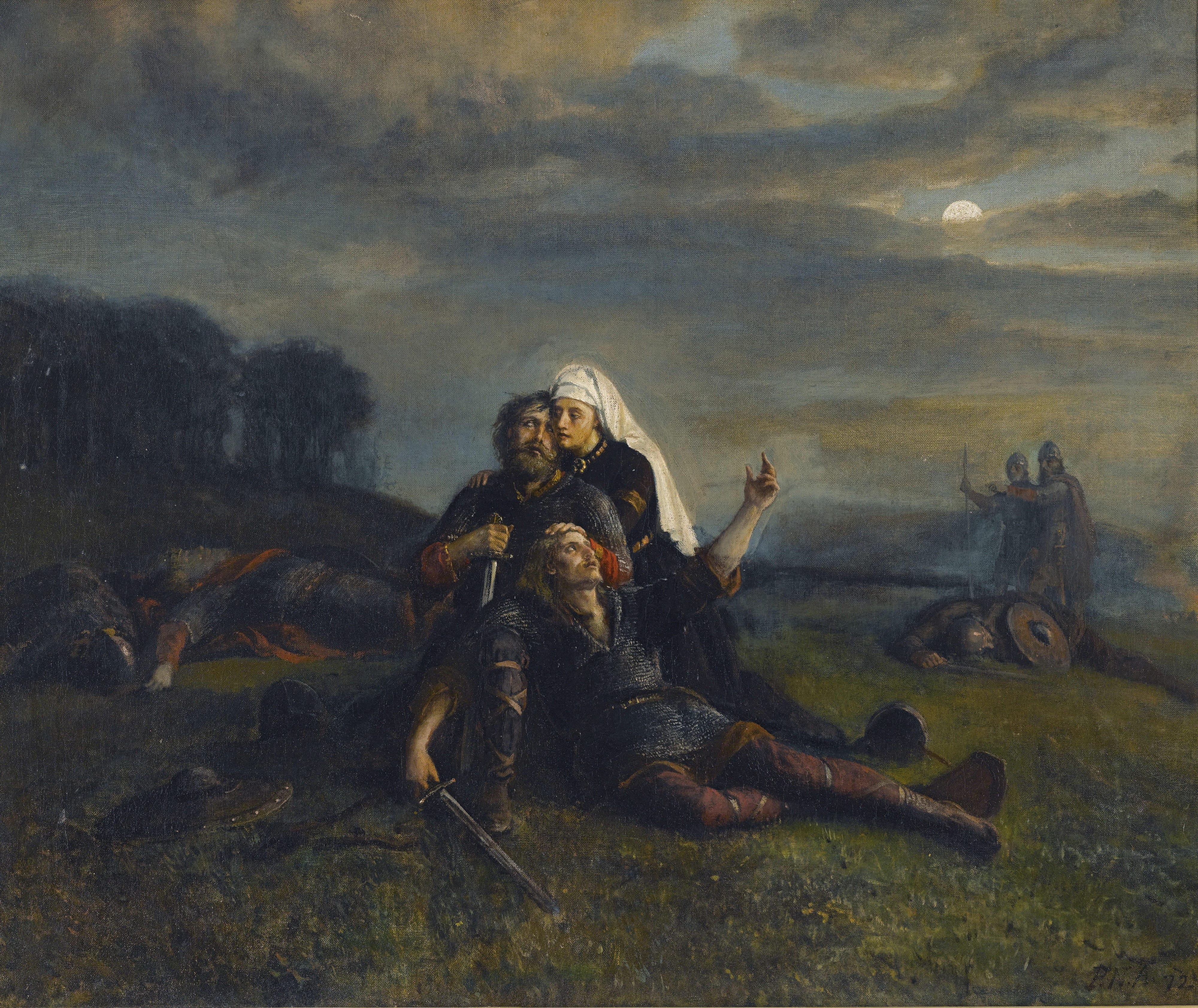
When my conversion to Catholicism began five years ago, I was asked during my catechesis to ascertain who my patron saint was. I was provided a list of various saints to study as I prayed and discerned which of them may in fact be my patron. Absent from this list, and many other encyclopedias of saints, was the patron saint of Norway.
This is not entirely surprising when considering the fact that Norway, and Scandinavia as a whole, has not been Catholic for hundreds of years—and in recent centuries has become largely agnostic. Naturally, its Catholic traditions have drifted to the periphery of the modern person’s view, almost forgotten.
The last article I published was written in memory of my friend Elias from Norway, who passed away in 2021 and whose death was the catalyst that spurred my conversion to Catholicism. Writing this was difficult for several reasons. It was challenging to write an autobiographical testimony that was influenced by the death of someone who was not my family. The question “how does a person respectfully write about how the death of a friend effected their own life?” was ever present in my mind throughout the entire process, which spanned months.
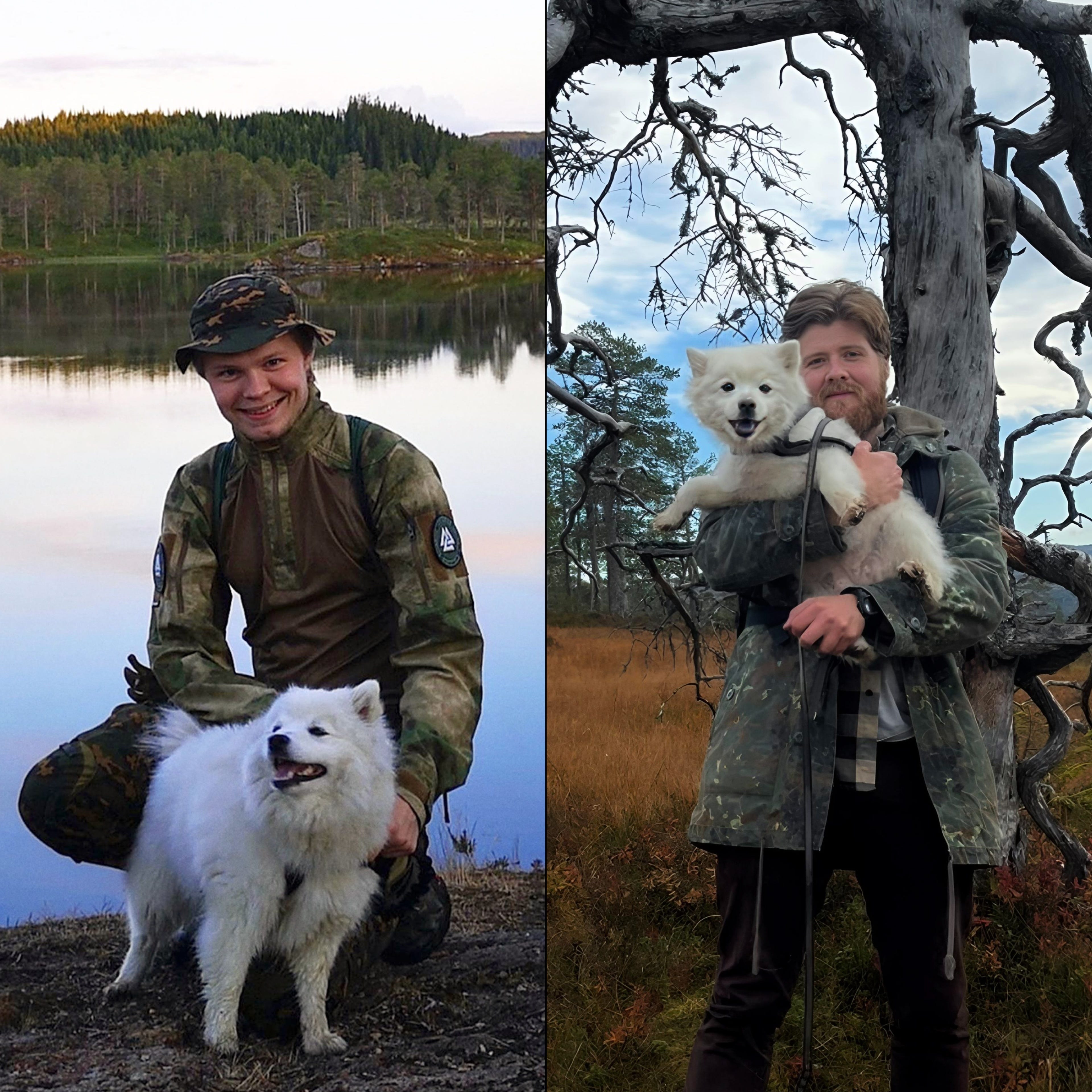
Because my conversion to Catholicism began with the loss of my friend, while I discerned which saint I might identify as my patron, I simply typed ‘Norway’ into the search bar of a database for Catholic saints online. I was presented with St. Olaf, the patron saint of Norway.
I had never heard of Saint Olaf before this moment, nor had any of my friends. It was shortly after this that I confirmed St. Olaf to be my patron. It was while studying the life of Olaf that I came to learn about St. Olavsleden—one of the most popular Catholic pilgrimages during the Early Middle Ages, which had been all but forgotten after 1537, when Norway became Lutheran and pilgrimage was outlawed.
“ The Norwegians most important city is Trondheim. It is now decorated with churches and visited by many people. There is the very blessed King and Martyr Olav’s relics. At his tomb the Lord also today works the greatest healing miracles. And people, who believe that they can be helped through this Holy man’s meritorious deeds, are coming from far away. ”
— Adam of Bremen, 1070
However, the St. Olavsleden pilgrimage route was officially reinstated in 2013, which covered the same distance St. Olaf walked with his army before the Battle of Stiklestad. Realizing this, I decided to embark on the pilgrimage alongside Elias’ childhood friend Sebastian as a way to honor him, and we began in Selånger on July 29th, Olaf’s feast day.
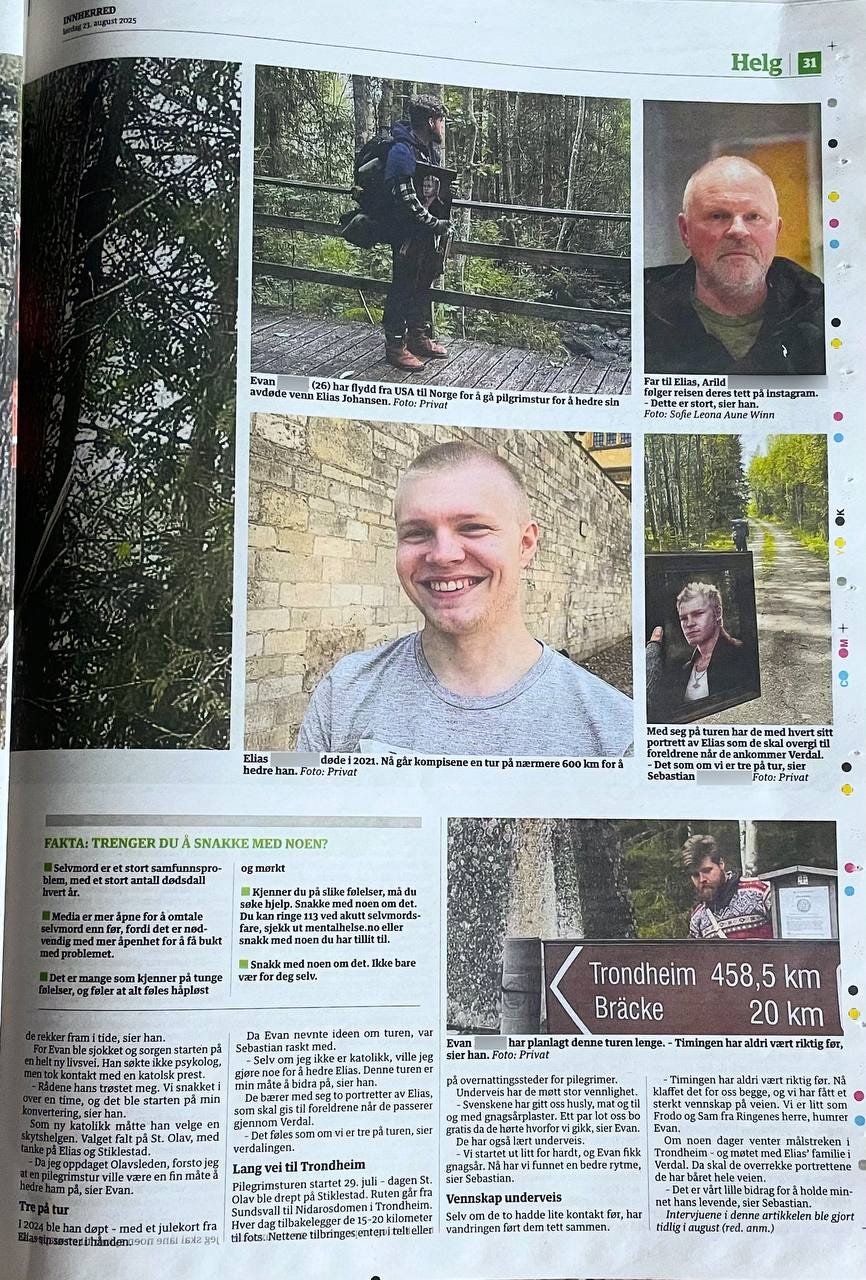
Sebastian and I met Bishop Erik Varden of Trondheim prior to setting off and received a blessing from him. We carried with us two portraits of Elias the entire journey, which spanned 580km and took us roughly thirty-five days on foot. We gave both portraits to his mother and father after our journeys end, and spent time with them at their homes.
Elias’ mother prepared for us a wonderful moose stew after Sebastian and I hiked through cold rain for many miles, which was one of the most delicious things I have ever eaten. Elias’ father gave Sebastian and I two knives that were made by his father, a highly skilled woodworker. We also spent time with his siblings.
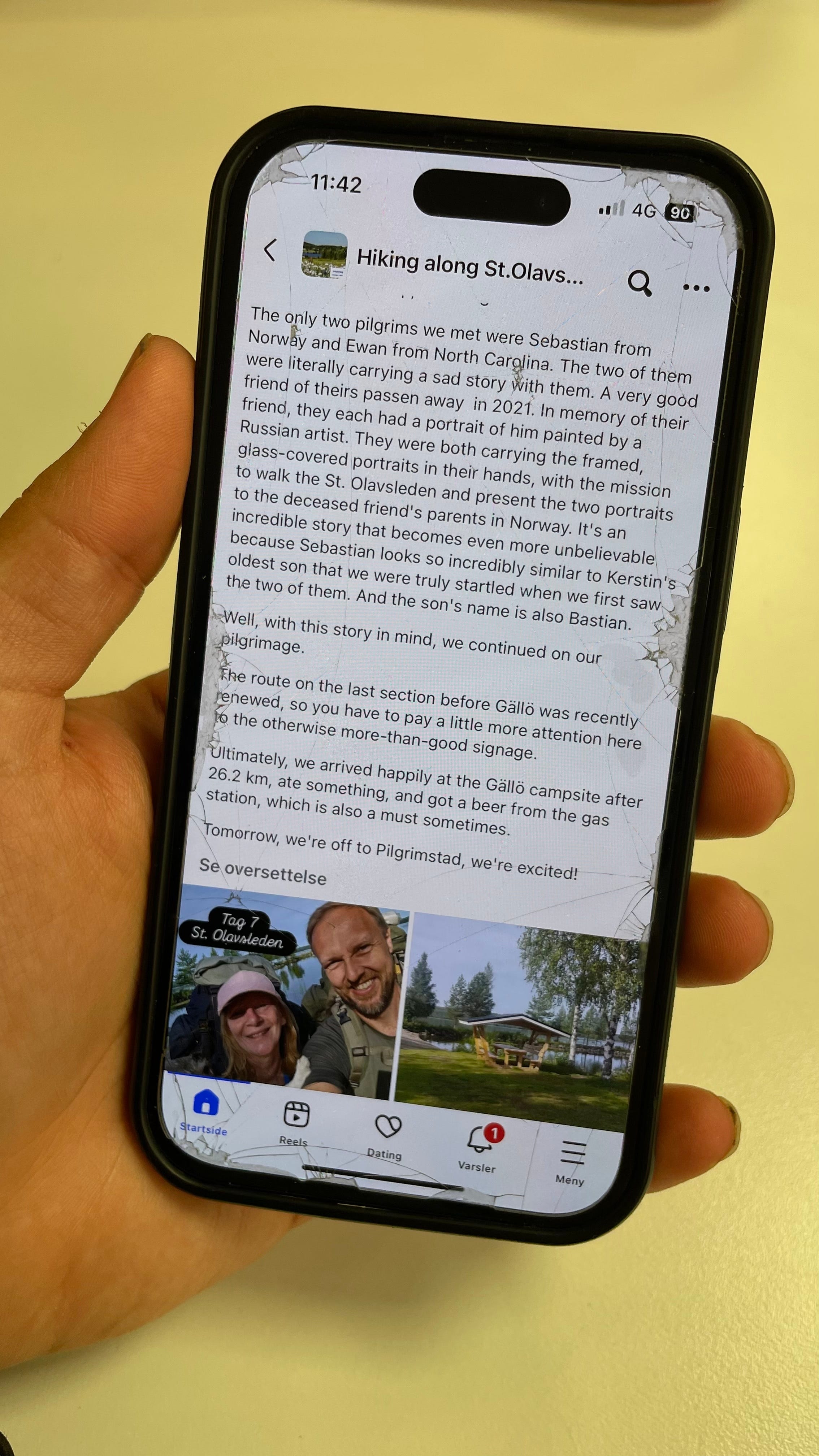
I documented much of our pilgrimage on instagram, and we were contacted by a journalist from Trøndelag that published our story in the local newspaper.
When Sebastian and I arrived at Stiklestad, the place where St. Olaf fell in battle, it was late at night. It was only the two of us, walking into that field, with no one else around but for one clerk behind the desk of the nearby hotel.
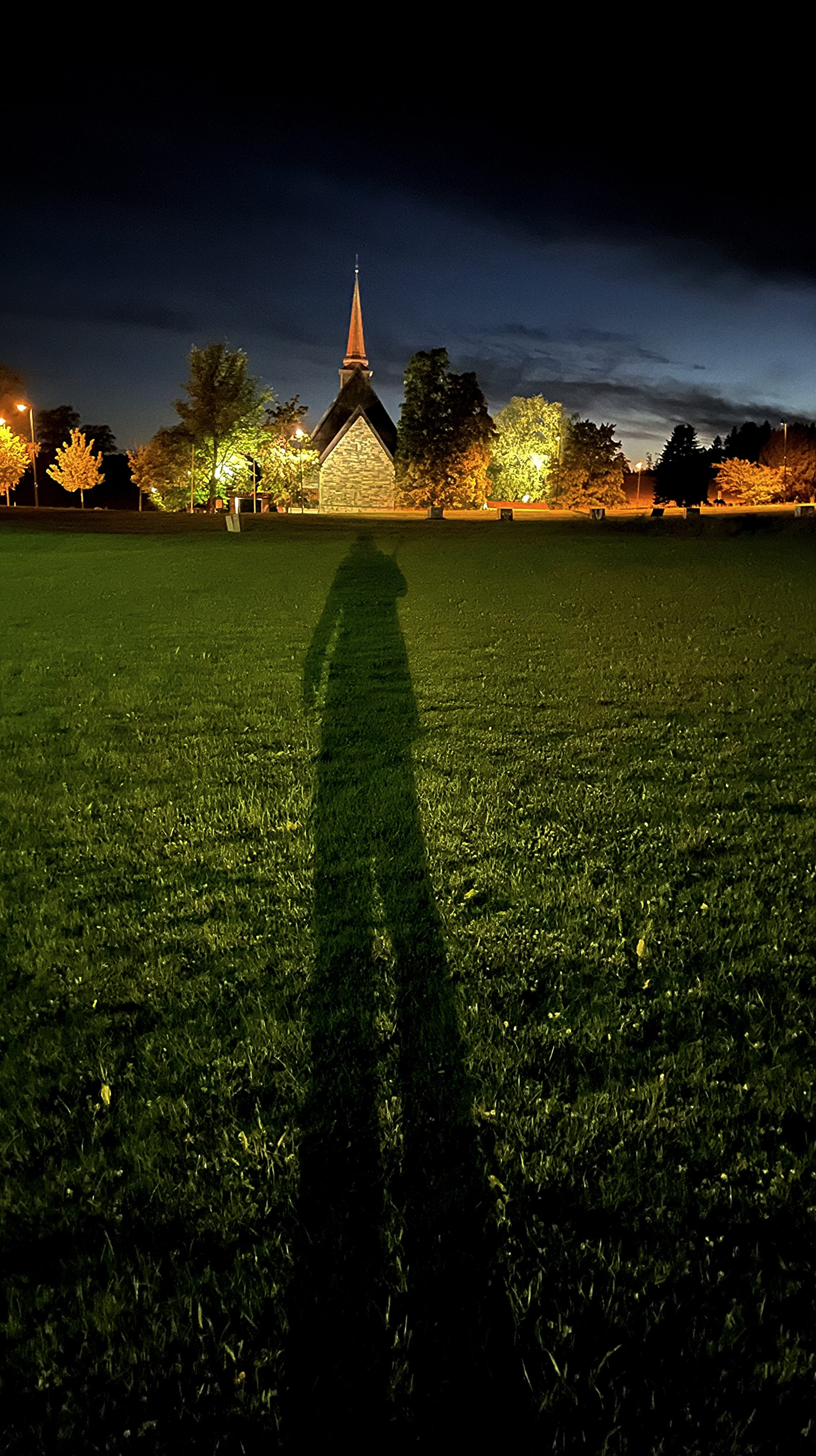
What I hadn’t known when I identified St. Olaf to be my patron saint was that Stiklestad, the place of his martyrdom, was a mere forty-minute walk from where Elias grew up. After Sebastian and I completed our pilgrimage, we met with Elias’ father at Stiklestad to share beers and discuss our month-long journey.
“Elias loved to spend time at Stiklestad. Once when he was little, there was a swing set in the field here, and I was pushing Elias on the swing. He was laughing with his mouth open, and a bee stung him right on the tongue,” he told us.
I had no clue about this connection. I identified St. Olaf purely from the fact that he was the patron saint of Norway—but never could have known that my friend lived by, and spent much time at, the place where he fell in battle.
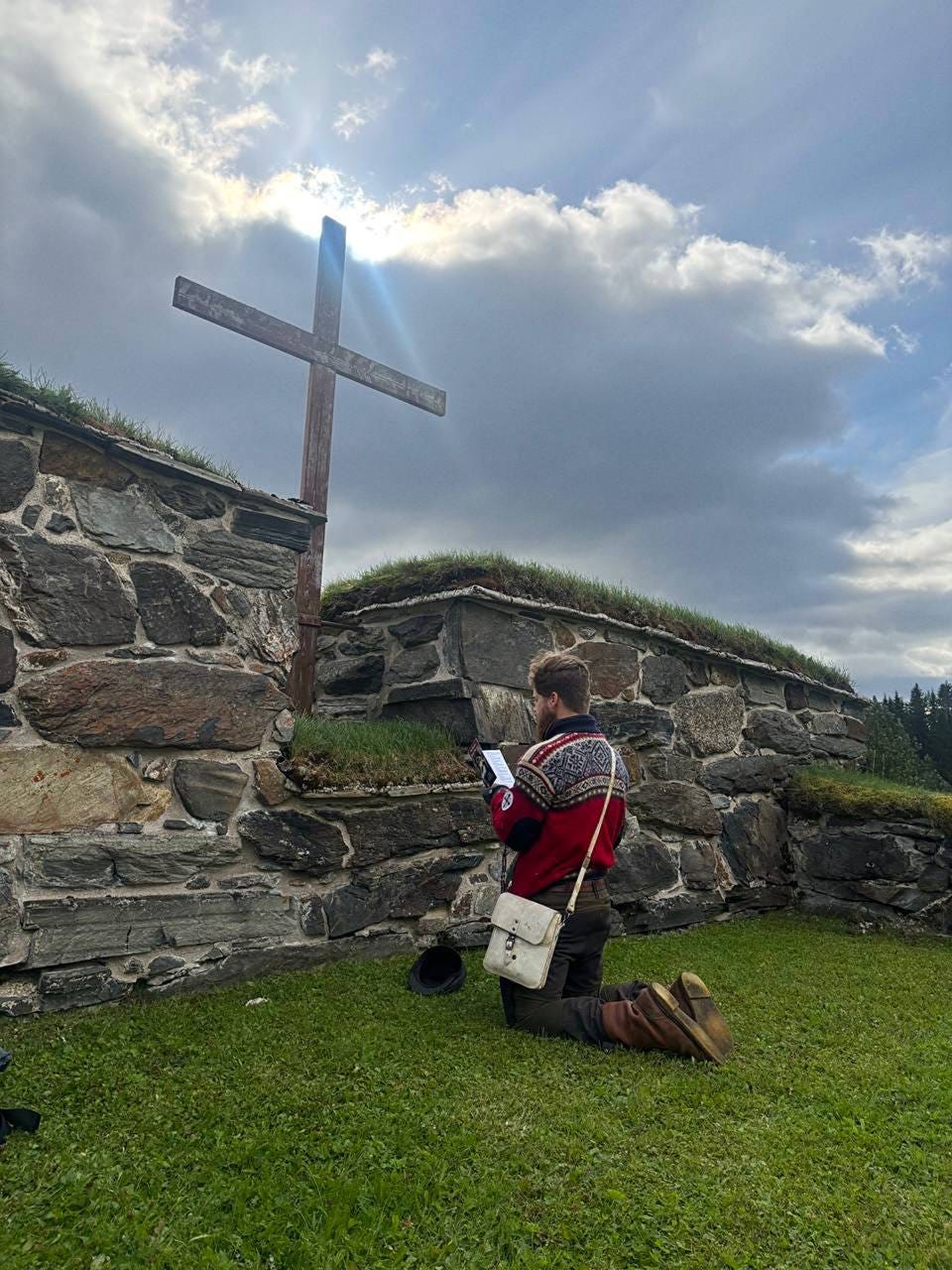
Sebastian and I had many compelling conversations during the time we shared on this journey. We laughed and had fun, we were somber and shed tears, and we prayed together and discussed Elias. On more than one occasion, we slept in the ruins of medieval churches. It is challenging to describe what it felt like, nestled beside stone walls that were built by men nearly a thousand years ago, waking up to the stars and being shielded from the wind by the stones they laid.
Elias’ father told Sebastian and I after finishing our beers where the stone St. Olaf died upon was, and he led us to it shortly afterward. It was recorded in the sagas that Olaf leaned against a large stone after being wounded in the Battle of Stiklestad, and he bled out while laying against it.
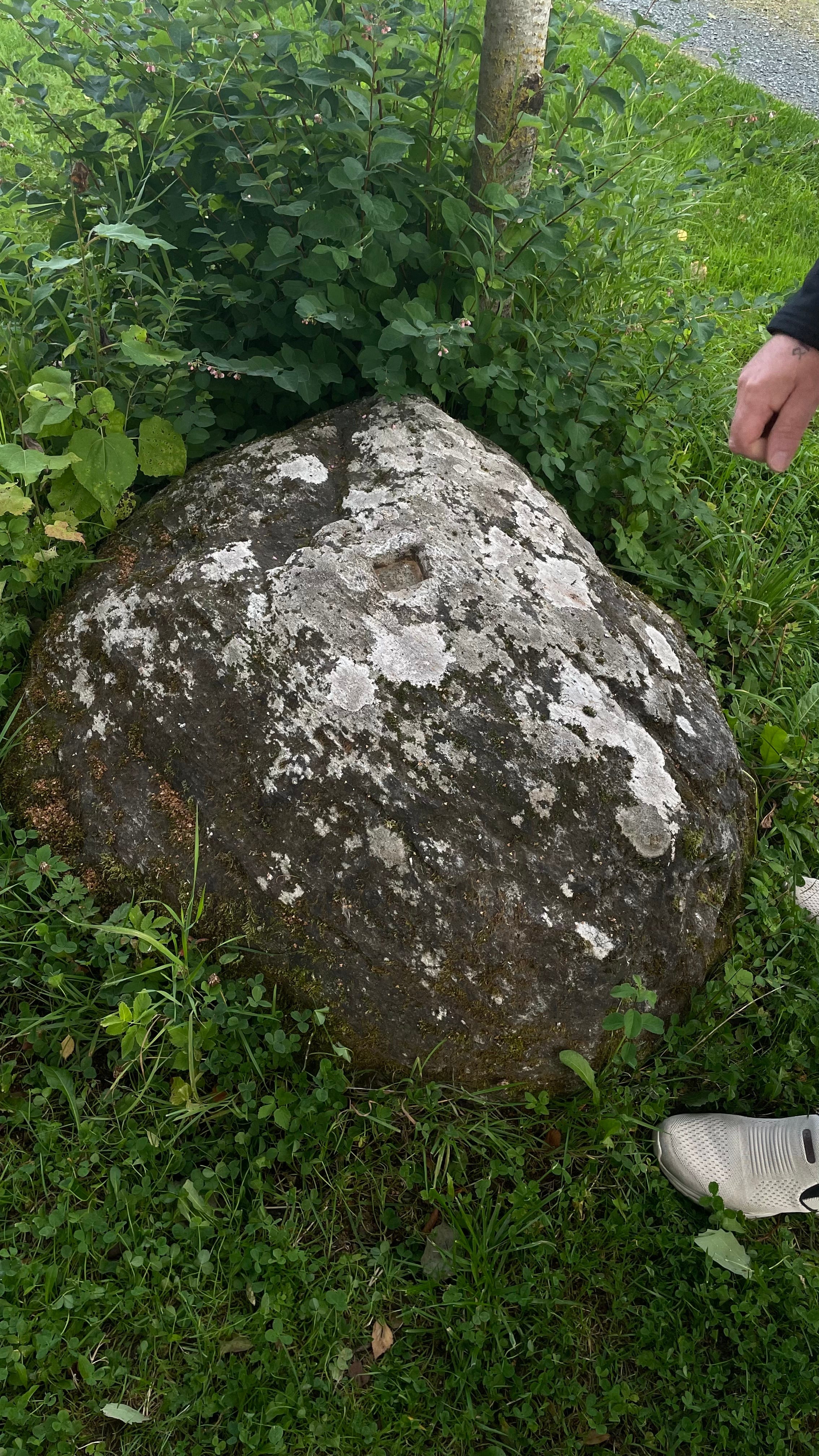
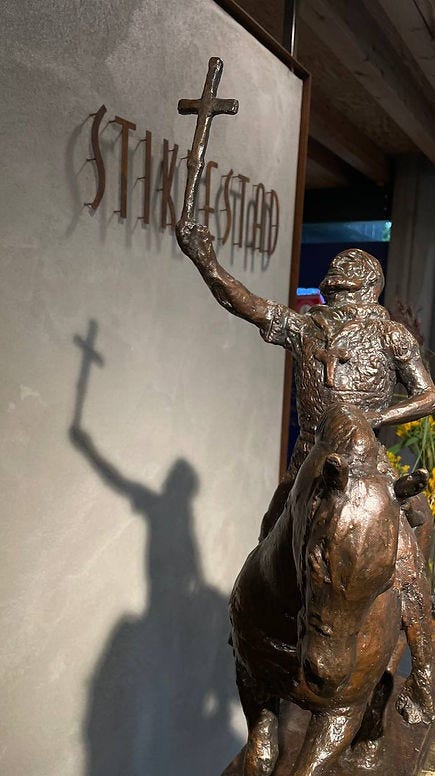
The stone he showed us rested by a sign that described it as ‘possibly the stone that St. Olaf died upon’, and a square cutout on the surface of the stone that was chiseled with medieval tools may once have held a relic of Olaf during the Middle Ages, covered by crystal as with many other medieval reliquaries.
One night, roughly a week after completing the pilgrimage, I was unable to sleep due to being sick. I had fallen ill with food poisoning in the last few days of our pilgrimage, and I was stirred awake around midnight. Unable to fall asleep, I grabbed my rosary and went for a walk. About thirty-five minutes later, I stood by this large stone Arild had shown us days prior.
I laid down across its surface and gazed up at the many stars, and prayed for awhile. This was a very surreal moment, in part due to the way sickness effects the mind, but equally by the fact that I was laying there atop the stone where St. Olaf had most probably died, beseeching him to pray for us.
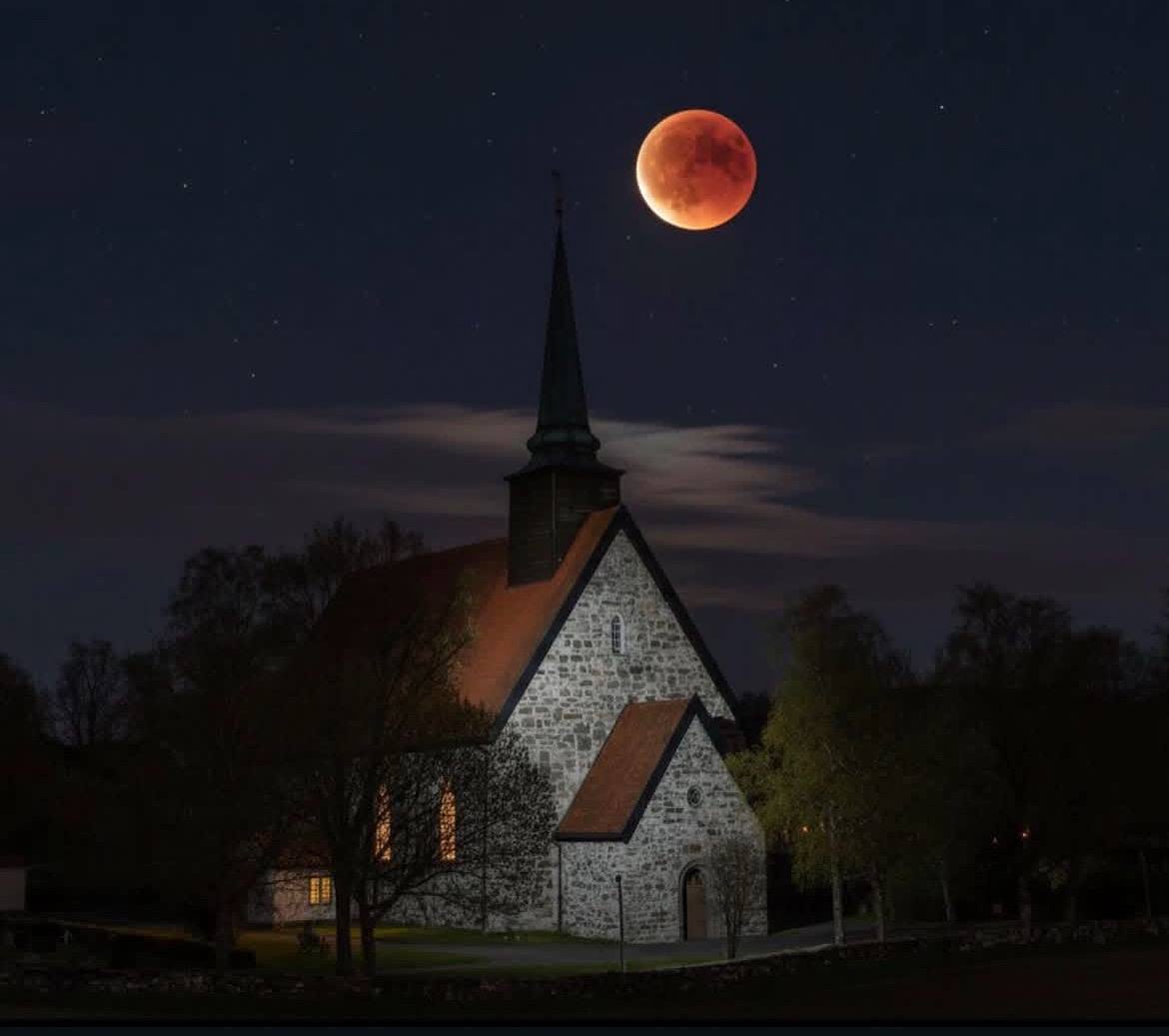
The day after this picture was taken of a blood moon over Stiklestad by Arild, I took the train down to Trondheim to meet with the lead archaeologist at Nidaros Cathedral: Dr. Øystein Ekroll. I had spoken with him over the course of several months prior to the pilgrimage in hopes of meeting him face-to-face.
After St. Olaf fell at the Battle of Stiklestad, his body was eventually interred in Trondheim, where a modest stone chapel would be built over his grave. Over time, this humble building became what is today Nidaros cathedral. During the Middle Ages, St. Olaf’s body, which was purportedly incorrupt, had been held inside a magnificent gold and silver shrine inside of the cathedral, so that visitors may venerate him.
However, By 1536, Norway was under Danish rule, and the Protestant Reformation began to reshape Christianity in Scandinavia. King Christian III of Denmark declared Lutheranism to be the official religion of Denmark and Norway, and this changed how Christian saints were venerated. The following year, Danish authorities destroyed the shrine of St. Olaf and melted down its silver and gold content. When they examined Olaf’s body, they gave a description of what it looked like five-hundred years after he died:
“In the innermost shrine Saint Olav’s body was resting intact with skin, flesh and bone, no limb divided from the other ... Olav’s face was completely intact with flesh and skin, his eyes somewhat sunken; the hairs of his eyebrows were clearly visible. The tip of his nose was partly lacking, his lips were somewhat inverted, his teeth were in place and were white. His jaw was quite intact, but there was no beard on it.”
Saint Olaf's body was then moved to Steinvikholm castle for a period, before being returned to Nidaros cathedral in a great procession in the year 1564, where it was hidden in an unknown location somewhere beneath the floor, and where it has remained ever since. When I met Dr. Ekroll over coffee for the first time, we discussed the possible whereabouts of Olaf’s remains—to which the archaeologist had confirmed, based on ground penetrating radar scans conducted in 2014, that he may have found the location of his body.
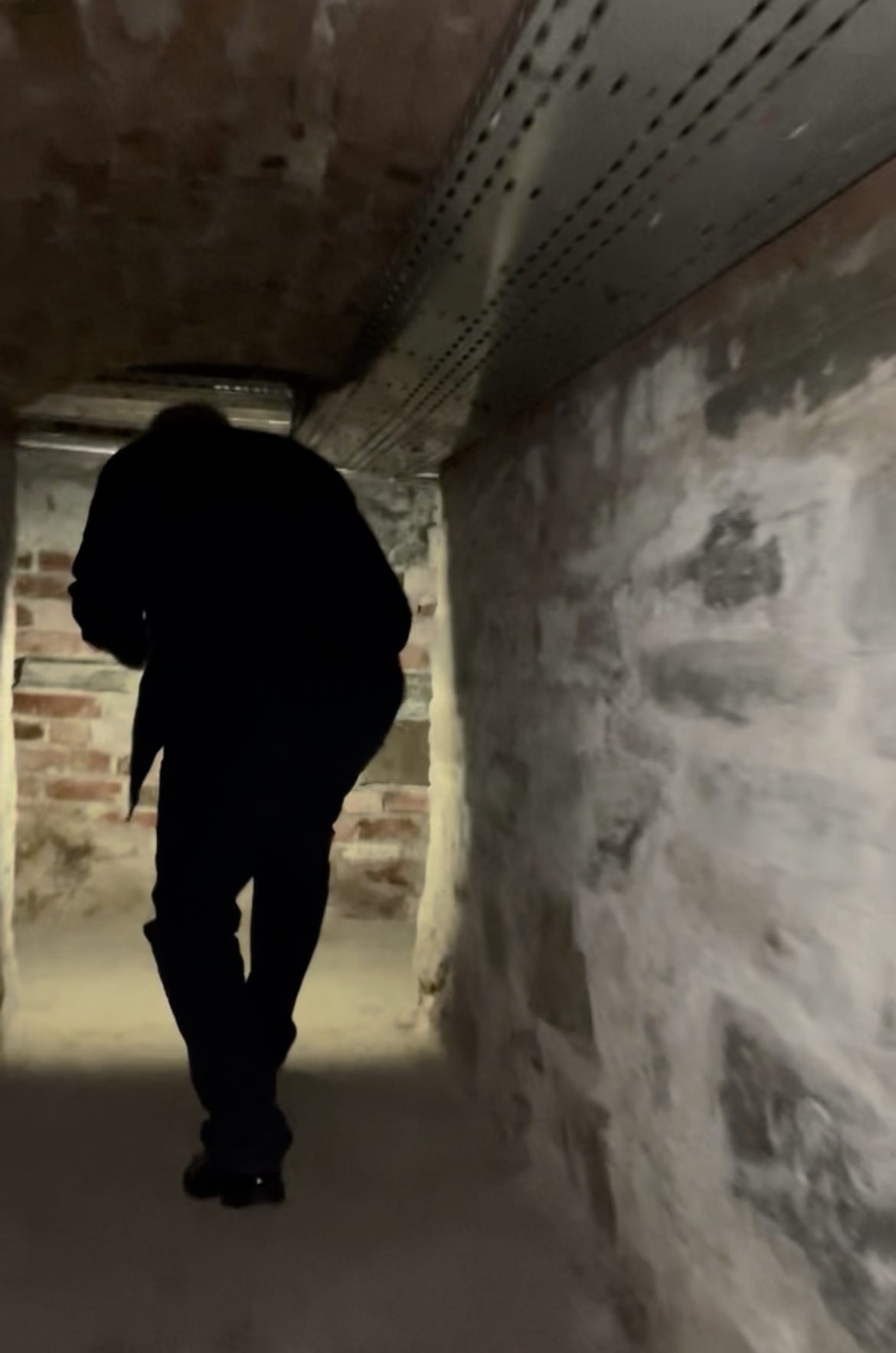
Dr. Ekroll was extremely kind and patient with my curiosity, and went out of his way to offer me a tour of the crypt beneath Nidaros cathedral to show me specifically where he suspects the body of St. Olaf to be, based on his own research and the anomaly discovered in 2014.
The Battle of Stiklestad took place on July 29th, 1030—making the upcoming year 2030 the millennial anniversary of when St. Olaf was martyred. If ever there were a time when the body of this once-honored saint might be recovered such that the public may venerate him once again, it is now.
Olaf: 2030
I am not an archaeologist. However, the professional researchers and scholars who are capable of this task may benefit from public support, if they can demonstrate that the public is interested in further investigations of these findings. This is why I have created Olaf: 2030.
By signing our Change.org petition, you can add your voice to this mission and share with Norway’s Directorate for Cultural Heritage your interest in this potential excavation. The goal of Olaf 2030 is to support the professionals in this project wherever and whenever they may need our support, and to advocate for the reverential recovery of St. Olaf’s lost remains.
But who was Saint Olaf?
“By his courage in the face of resistance, he shows us that some things are worth dying for.”
— Bp. Erik Varden
Olaf Haraldsson
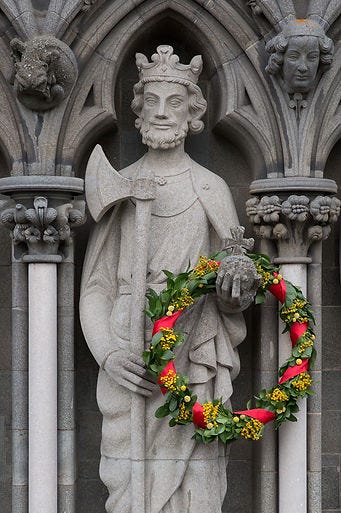
In the early 11th century, Norway was comprised of petty kingdoms ruled by chieftains who competed with one another for influence and authority. Olaf Haraldsson, today remembered as Saint Olaf, aimed to consolidate his country into one unified kingdom. After being declared king in the year 1015, Olaf would go on to produce historic achievements for Norway.
Legal protections for women
Before Olaf's reign as king, women who were victims of rape were not given legal justice. Her assaulter was only lawfully expected to pay compensation to her father or husband, and she herself would have lost status and honor in her community for being assaulted. Olaf changed this, providing the women of Norway individual legal protections against rape, including slave women, who often had little to no protections before St. Olaf's laws.
“Ef maðr nauðgar konu, þá er hann útlægr ok fellr fé allt.”
“If a man forces a woman against her will, he shall be outlawed and forfeit all his property. The woman shall bear no penalty.”
St. Olaf also established laws that protected women who became pregnant. Before his reign as king, if a woman had a child with a man outside of marriage, the man could often deny responsibility, leaving her and the child vulnerable. In addition, Olaf established legal protections for women's consent to marriage.
“Ef maðr gerir konu barn ok vill eigi við kenna, þá er hann sekur ok útlægr.”
“If a man lies with a woman and she becomes with child, he shall not deny the child, nor cast the woman aside. If he does so, he shall pay full compensation and be subject to outlawry.”
“Engi maðr skal neyða konu til hjónabands; ef hann gerir það, er hjónabandið ógilt ok bóta skal greiða fyrir vanvirðingu hennar. Ambátt eða frilla má eigi taka gegn vilja hennar.”
“No man may force a woman into marriage. If he does so, the marriage shall be void, and he shall pay fines for dishonoring her. A woman may not be taken as concubine against her will.”
Legal protections for children
Under the old laws in Norway, unwanted or sickly babies could be left alone in nature to die (útsetning). As king, St. Olaf outlawed this practice, protecting the lives of children even if they were born with illness, disability or were deemed undesirable.
“Öll börn skulu upp færa. Engi skal barn út bera. Þótt barn sé vanskaptað eða veikt eða heilbrigt, þá skal það skírt ok upp alit. Sá er barn út berr, er útlægr.”
“Every child shall be raised. It is forbidden to expose a child. Whether it is weak or strong, deformed or healthy, it shall be baptized and raised. If anyone exposes a child, he shall be outlawed.”
If we assume that even ten people survived and reproduced thanks to this law in the early 11th century, St. Olaf's legal protections against infant exposure accounts for millions of living Norwegians today, and may have indirectly shaped the ancestry of nearly every modern Norwegian.
Charity at Stiklestad
Before the Battle of Stiklestad, St. Olaf had his men prepare silver to give as compensation to the families of soldiers in the army that opposed him. His followers questioned him about this, and Olaf explained his decision.
“This money you shall conceal, and afterwards lay out ... as gifts for the life and souls of those who fight against us, and may fall in battle. It shall be given for the souls that stand against us in the ranks of the bonders army, and who fall by the weapons of our own men.”
Around 995 Olaf was born
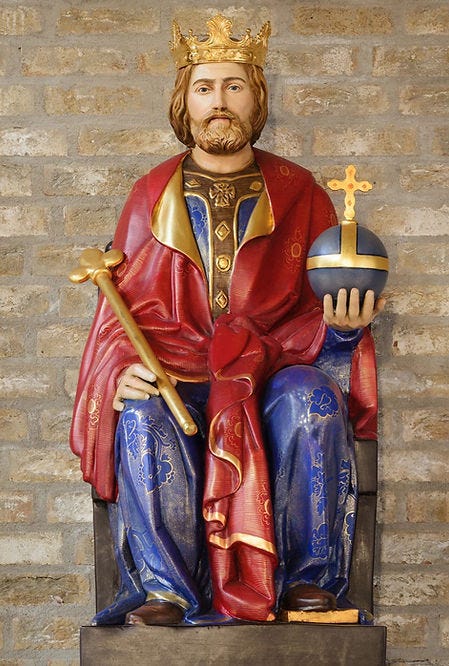
Olaf grew up in Ringerike, what is now Buskerud county, with his mother Åsta Gudbrandsdatter and stepfather Sigurd Syr. His birth father, a man named Harald Grenske, was descended from Harald Fairhair—a Norwegian king who once unified Norway into one kingdom. By the time of Olaf’s birth, the country had fallen into disunity once again.
An excerpt from Óláfs Saga Helga may give us a glimpse of the young Olaf’s sense of humor and lightheartedness, where he pranks his stepfather Sigurd by saddling a goat instead of his horse.
“Olaf went to the goats’ pen, took out the largest male goat, led him forth, then placed Sigurd’s saddle on him, and then went inside to tell his stepfather he had saddled his riding horse. Now when Sigurd came out and saw what Olaf had done, he said: “It is easy to see that you have little regard for my orders!” Olaf replied little, but went his way laughing.”
At age 12 Olaf became a viking
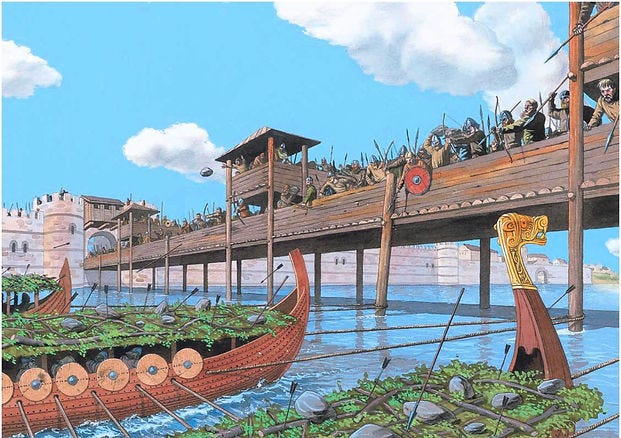
During the Viking Age, upper class boys would join raiding expeditions at an early age, and Olaf was no exception. He began going on expeditions throughout the Baltic, and by the time he was nineteen years old, he assisted the English king Æthelred in reclaiming London from Danish forces.
Despite being young, Olaf proved himself a shrewd military tactician. During the attack on London, he had his men repurpose thatch from the roofs of local houses to use as headcover against arrows from hostile archers. Olaf and his men sailed their longships under London bridge, tied ropes around its beams, and pulled the bridge down.
“Olaf, and his fleet with him, rowed right up under the bridge, laid their ropes around the beams which supported it, and then rowed off with all their ships as hard as they could down the river. As the beams under it loosened and broke, the bridge gave way; and a great part of the men upon it fell into the river.”
At age 19 Olaf converted
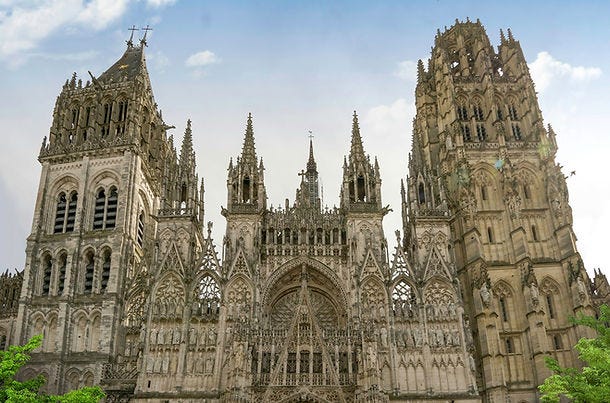
Olaf spent the winter of 1013 in Normandy, France. It was here that he converted to Christianity. He was baptized by the Archbishop of Normandy, Robert II, in Rouen cathedral. Fr. Olav Müller writes about what the young Olaf may have been thinking during this formative moment in his life.
“Olaf had time when he was in Rouen to compare the gods of Norse religion with the White Christ and his host of angels ... he knew from the pagan faith of his childhood that the gods in Valhalla had come into being within time and that they would all perish in Ragnarokk. His Christian friends would tell him that the White Christ was uncreated. He existed from all eternity. Nor would he perish in Ragnarokk.”
In 1015 Olaf became King
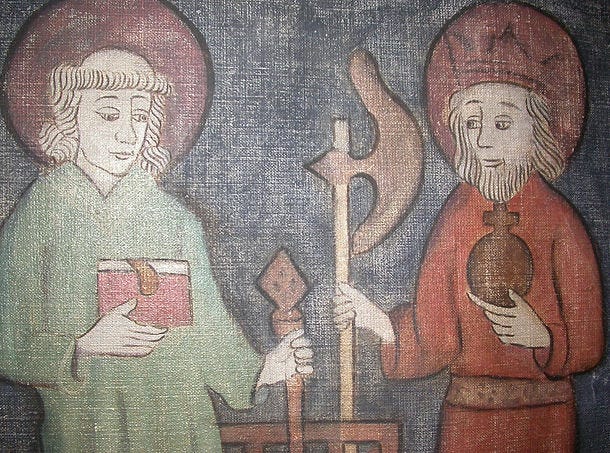
When Olaf returned to Norway, he told his mother and stepfather of his plans to become king and unite the country into one kingdom. Olaf began rallying support among the local chieftains for his cause, being formally recognized as king at a great assembly (Øretinget) in Trøndelag. He cemented his rule after a decisive victory at the Battle of Nesjar in 1016.
Olaf reigned as king for roughly thirteen years, when by 1028, many of the chieftains under him grew resentful of his unitary rule, being obligated to pay taxes to him rather than collecting it themselves. King Canute of Denmark, who was also king of England at this time, had interest in ruling Norway, and many of king Olaf’s subjects saw opportunity for prosperity by serving the wealthier Danish king. Because of this, king Olaf was forced into exile in Novgorod, Russia, where he stayed with his brother-in-law Yaroslav the Wise.
Olaf the Holy
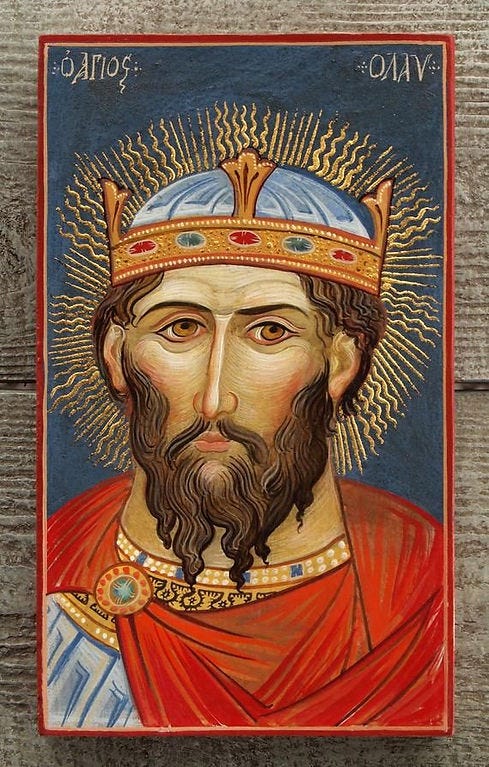
During his time in exile, there seemed to be a significant deepening of Olaf's Christian faith. He forgave one of his friends, a man named Bjørn, for taking money from king Canute in a plot to betray him.
“ “I have taken money from King Canute’s men, and swore to them oaths of fealty. But now will I follow you, and not part from you as long as we both live!” Then Olaf replied: “Stand up, Bjørn. You will be reconciled with me, but reconcile your perjury with God.” ”
Olaf's brother-in-law, Yaroslav the Wise, offered him a great kingdom to rule over in Russia—but he turned down this offer, and instead considered going on pilgrimage to Jerusalem, or even becoming a Christian monk.
“King Yaroslav and Queen Ingegerd offered him to remain with them, and receive a kingdom called Vulgaria ... but Olaf himself had resolved to lay down his royal dignity, to go out into the world to Jerusalem, or other holy places, and to enter into some order of monks.”
While Olaf stayed in Novgorod, he once accidentally violated Christian doctrine by working on the sabbath day, a mandatory day of rest. As penance, he lit wood shavings on fire and held them in his hand to be burned.
“Then the king ordered a lighted candle be brought to him, swept together all the wood shavings he had made, set them on fire, and let them burn upon his naked hand; showing thereby that he would hold fast by God’s law.”
The Battle of Stiklestad
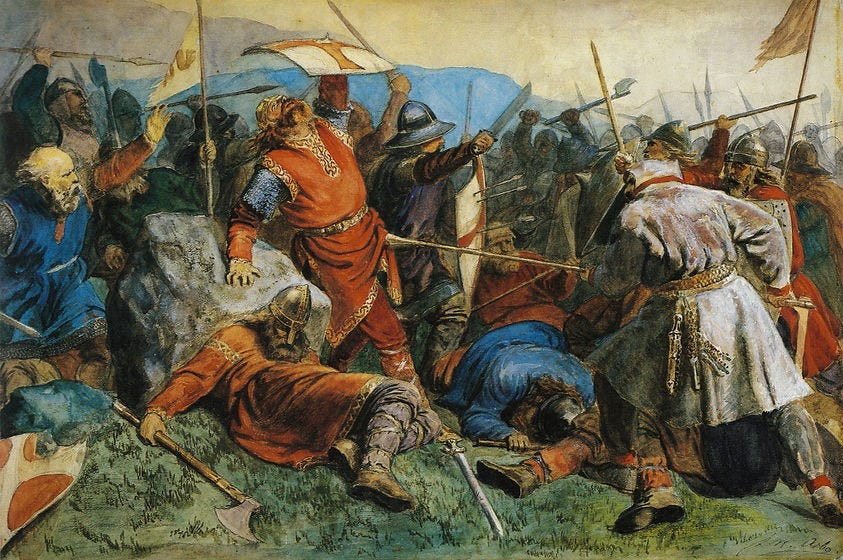
Olaf had a dream of his cousin while in exile, a former Norwegian king named Olaf Tryggvason, where he was told to return to Norway and reclaim the throne, and that this was the will of God. Yaroslav and Ingegerd begged him not to return and risk his life, offering him all the power he ever wanted in Russia. But Olaf insisted this was his calling, despite the risks.
“They dissuaded him from this expedition, and said he can receive as much power in their dominions as he wanted, but begged him not to return and risk his life. Then king Olaf told them his dream, saying that he believed it to be God’s will that it should be so.”
Olaf then sailed to Sweden, making his way towards Nidaros to reclaim the throne. He and his men were intercepted in the town of Stiklestad by an army of men who supported king Canute, and he fell in the Battle of Stiklestad on July 29th, 1030. Very soon after the battle, the Norwegian population regretted the death of Olaf, for the Danish king Canute imposed far harsher taxes on them, and treated Norwegian citizens as lesser than Danes.
In 1031 Olaf is declared a saint
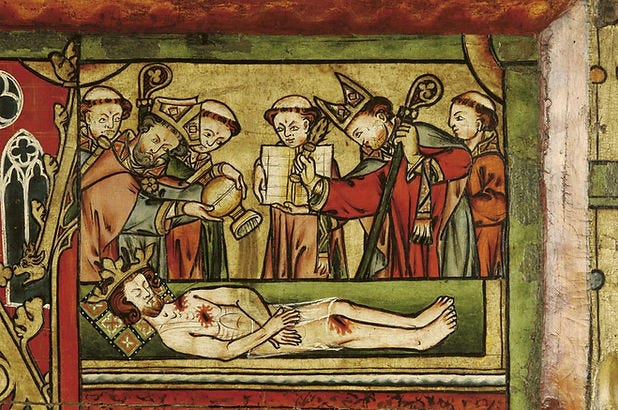
Following Olaf's death at Stiklestad, his body was retrieved and secretly buried by the Nidela river. Rumors of miracles associated with Olaf began to spread across Norway, and one year after his death, Bishop Grimkell of Trondheim exhumed his body and found it to be incorrupt. Olaf was locally declared a saint, and his body was later moved to Nidaros and enshrined.
Olaf became one of the last saints canonized by both the Catholic and Orthodox churches before the Great Schism in 1054
Forty years after he died, a stone church began to be built around Olaf's shrine in Trondheim, which eventually became Nidaros cathedral. He was posthumously given the title Rex Perpetuus Norvegiae; the Eternal King of Norway.
Bereaved by their actions, a man named Kalf Arnesson, who fought against St. Olaf in the Battle of Stiklestad and possibly delivered the killing blow that ended his life, travelled to Novgorod, Russia, with another man who fought against Olaf, Einar Thambarskelfir, to ask Olaf's son, Magnus, to forgive them. He did forgive them, and the two men supported Magnus' claim to become king. Kalf then became Magnus' foster-father.
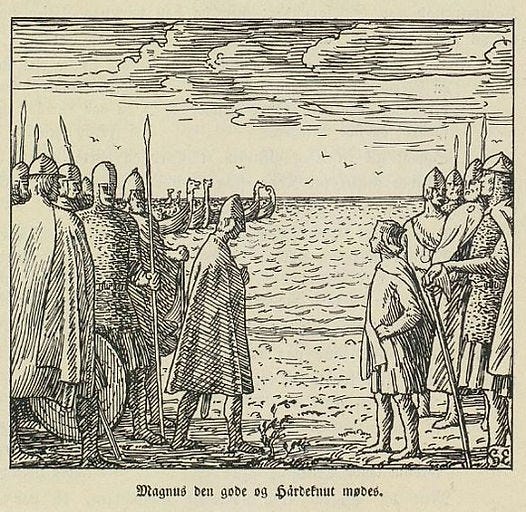
“Magnus promised them, under oath, secure peace and full reconciliation, and that he would be true and faithful to them all when he became king of Norway. He was to become Kalf Arnesson’s foster-son.”
Magnus became king of Norway in 1035, and is remembered as Magnus the Good. Pilgrims began travelling to Trondheim to venerate St. Olaf at his shrine in Nidaros cathedral. This became one of the most popular pilgrimages in Europe during the early Middle Ages.
Where is St. Olaf’s body today?
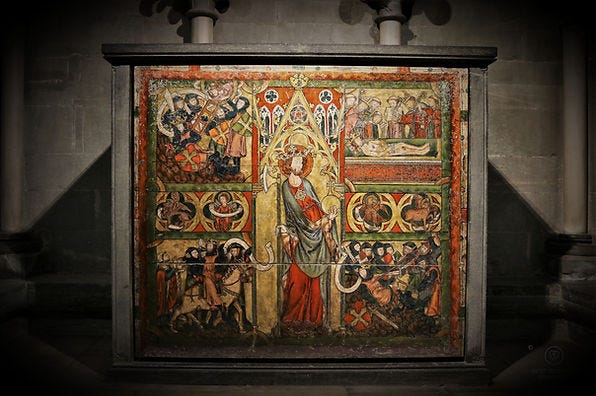
Dr. Øystein Ekroll, lead archaeologist at Nidaros cathedral, has found a possible location of St. Olaf’s body after it was hidden by Danish authorities in the early 16th century. It may be situated behind the main altar under the floor of the esatern-most chapel, buried beside 17th century coffins. In 2014, the Nidaros Cathedral Restoration Workshop conducted georadar scans with archaeologists from NTNU that confirmed an anomaly in the same location that Dr. Ekroll believes St. Olaf to be.
1030
—
2030
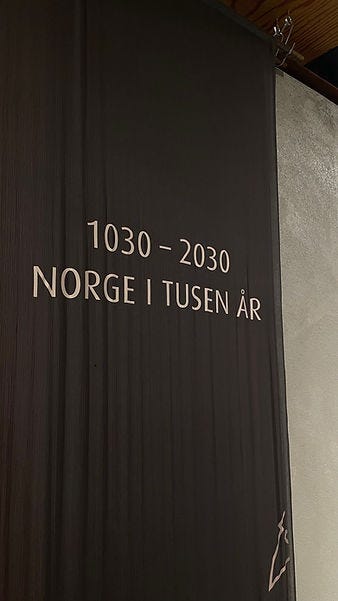
2030 will mark the millennial anniversary of St. Olaf’s death, and in conjunction with the National Jubilee, it is our hope that we might remember why we celebrate this historic occasion. The goal of Olaf 2030 is to assist professional scholars, archaeologists and researchers in conducting a reverential recovery of St. Olaf’s remains—which once were put at rest with due respect for his historical and religious significance, but since hidden from the public for hundreds of years.
By raising public awareness of St. Olaf’s legacy as king and martyr, we aim to demonstrate that the general public, both in Norway and abroad, supports this excavation. If you wish to add your voice, please consider signing our petition.