


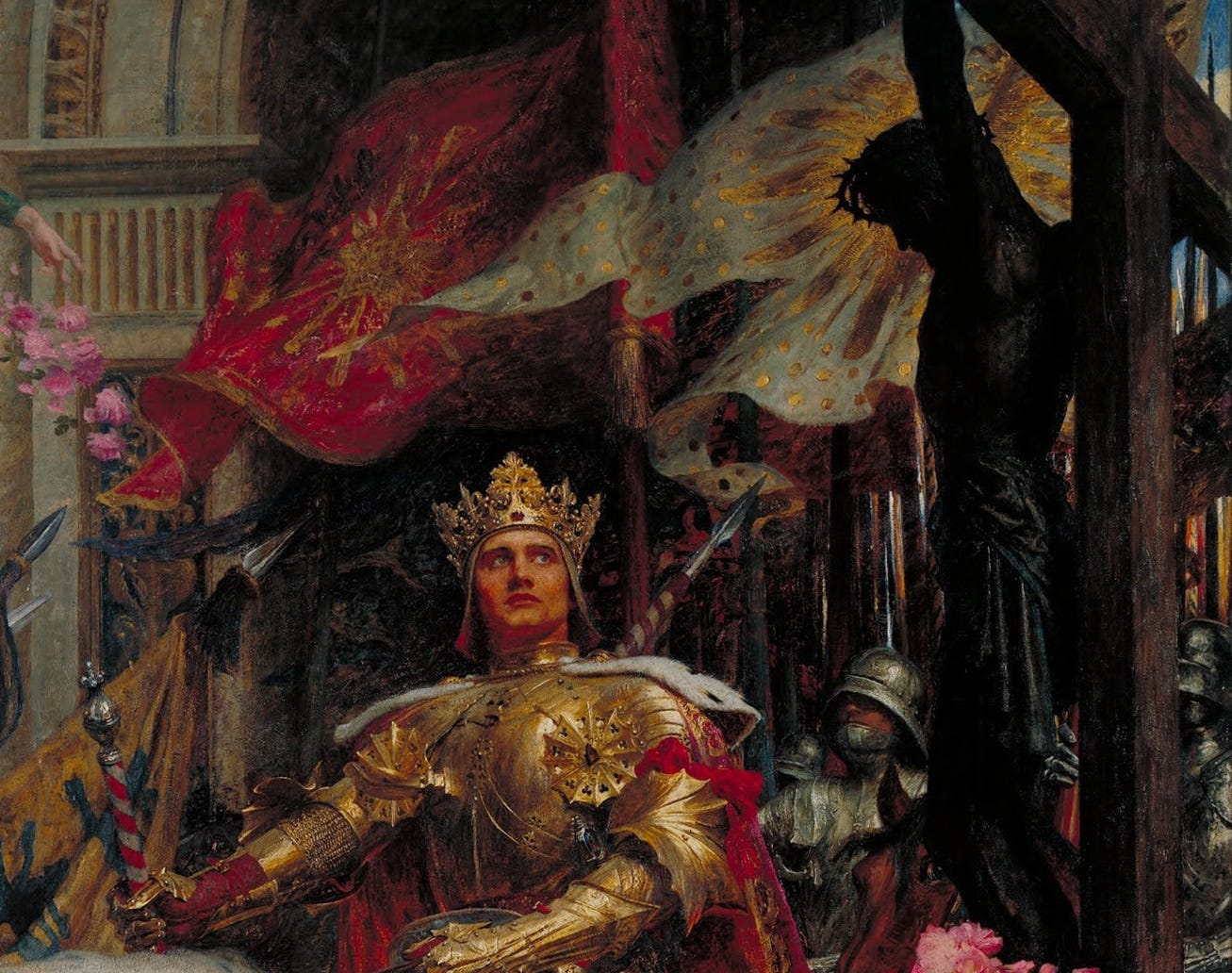
Responsibility can only exist insofar as its bearer is subject to a higher power. No other declaration could possibly contradict the ethos of the modern politician than this, victorious or otherwise. However, our ancestors understood this hierarchical reality well—even if intuitively.
If the leader of a people assumes their authority to lead not from Heaven, (means conducive to the will of God as expressed through naturally-forming hierarchies), but rather is granted ‘permission’ to lead by the masses themselves, then they are at once incapable of leadership at all, and instantly become the subject of infinite compromise rather than a subject of their people as such. This most often continues until their tenure inevitably concludes in a lukewarm whimper, with only modest results to show for their efforts, if any at all.
No airline pilot was ever democratically elected into the seat of a jet, nor could he pilot the plane competently without facing away from his passengers; his back turned to them and sealed securely away from their interruption. And yet, within the post-protestant culture in which we live, the status quo demands that anything short of active conversation between cockpit and business class is to be classified as nothing less than authoritarianism.
Let us examine this declaration more closely:
“Responsibility can only exist insofar as its bearer is subject to a higher power.”
By its very nature, that which bestows responsibility upon a subject must be greater than that subject, otherwise the bestower in this case is incapable of bestowing anything at all, being itself a subject. If a leader is elected to lead not by the granting of responsibility from that which is Greater, but instead merely granted the permission to lead by the masses themselves, then what precisely is it that makes the masses ‘greater’ than their elected leader?
If a leader merely receives permission from the masses to lead, rather than inheriting the responsibility to lead from God to Whom they ultimately must answer, then the power that reigns over the elected leader, wielded by the masses who elect them using their own free will, (a will that is flawed due to its limited and sinful nature), is violence. In a political context, this is expressed as civil unrest.
However, even if we assume it is the case that the threat of civil unrest is truly held over the heads of elected leaders, it does not help in overcoming the conundrum that the very same force held over their heads can be, and often is, leveraged against the democratically less popular half of the masses. When this is done in the extreme, civil unrest can potentially develop into civil war.
However, the notion that civil unrest can still be considered today a genuine threat that looms over our elected leaders is a bold one, if not downright ridiculous. To think even for a fleeting moment that the same users of doordash and netflix can successfully overturn an established government and its military calls for a serious reconsideration of ones’ worldview. Thus, we face the sad reality: voters who elect their leaders into power, in truth, hold no real power over them.
This begs the question: if the masses decide themselves to grant permission to their leaders to lead them, as opposed to accepting the Will of God as it is naturally expressed, but yet they are unwilling to be violent, or incapable themselves of violence, then precisely who in such an arrangement actually wields the power to enthrone leaders if not the evildoers? Those malevolent actors whom are willing to utilize every subversive means to achieve their own nefarious ends, regardless of anyone else’s ‘vote.’ A clear example of this is Hollywood and its role in the American political substrate.
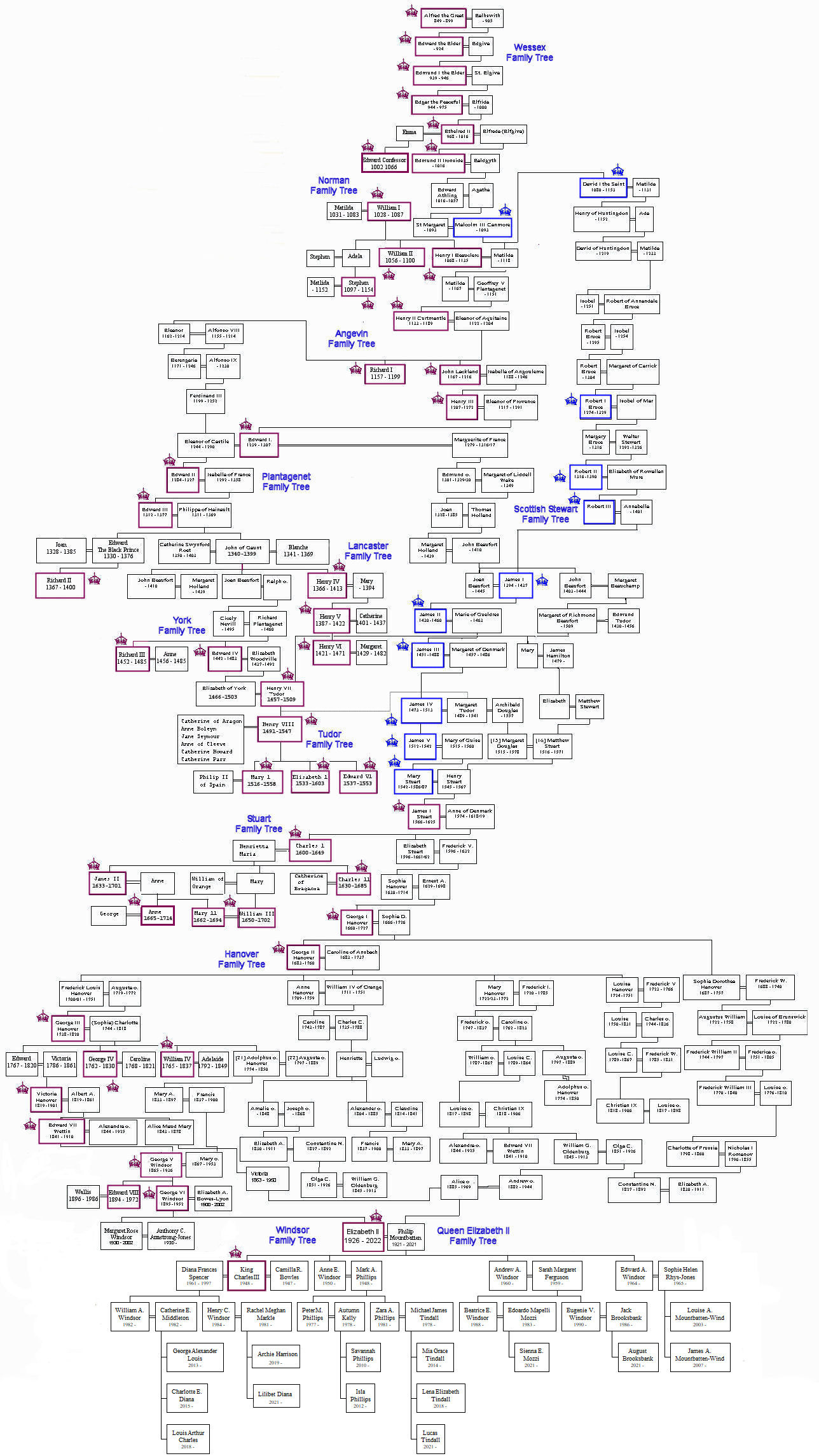
Let us note that that the British Royal Family themselves hold status adjacent to that of Hollywood pop icons in the United States, with their own tabloids, scandals and acts of charity—only, the status of the Royals differs significantly from celebrities in that it is not the product of mere invention, but the inheritance of a bloodline that holds deep roots woven within the very fabric of their culture. In this way, they are polished, conserved and maintained within the bounds of ancient traditions that they are obligated to uphold, and live up to, as well as a duty to their people, unlike mere celebrities. Or to put it more simply, they serve as the living embodiment of the British people as such.
If we take seriously this understanding of power and authority, we may well conclude that the responsibility to lead that the democratic masses in the West so proudly ‘permit’ their leaders to adopt, in reality, holds no meaning whatsoever. For their leaders are no longer truly their subjects anymore, but rather the subjects of those pervasive sinners most willing to achieve their own ends, whose inclinations trace their rotten currents back to the Devil himself—this oftentimes at a steep cost to the heartful families that comprise the happiness of our nations.
If we strip the authority to enthrone the representatives of society from the hands of God, we have no right to complain when our authority pales in comparison to His. Such a system will inevitably result in a rotten substrate, from it emanating not only cowardice and impotence among its constituents, but even worse, a breeding ground for sin. A society built upon such a foundation will almost always inevitably deteriorate into unrecognizable chaos, and tyranny will reign supreme, lest God once more be recognized as the King of Kings, the bestower of all power beneath Heaven.